
Design, Build, and Operate Enterprise-Grade MCP Servers
MCP (Model Context Protocol) Servers provide a standardized, secure way for LLM applications to access tools, data, prompts, and resources. We build production-ready MCP servers that power reliable, policy-controlled AI workflows. Oodles designs and deploys MCP servers using Python, TypeScript / JavaScript, JSON-RPC, HTTP & WebSockets, and containerized cloud infrastructure—enabling secure, scalable, and auditable AI integrations.
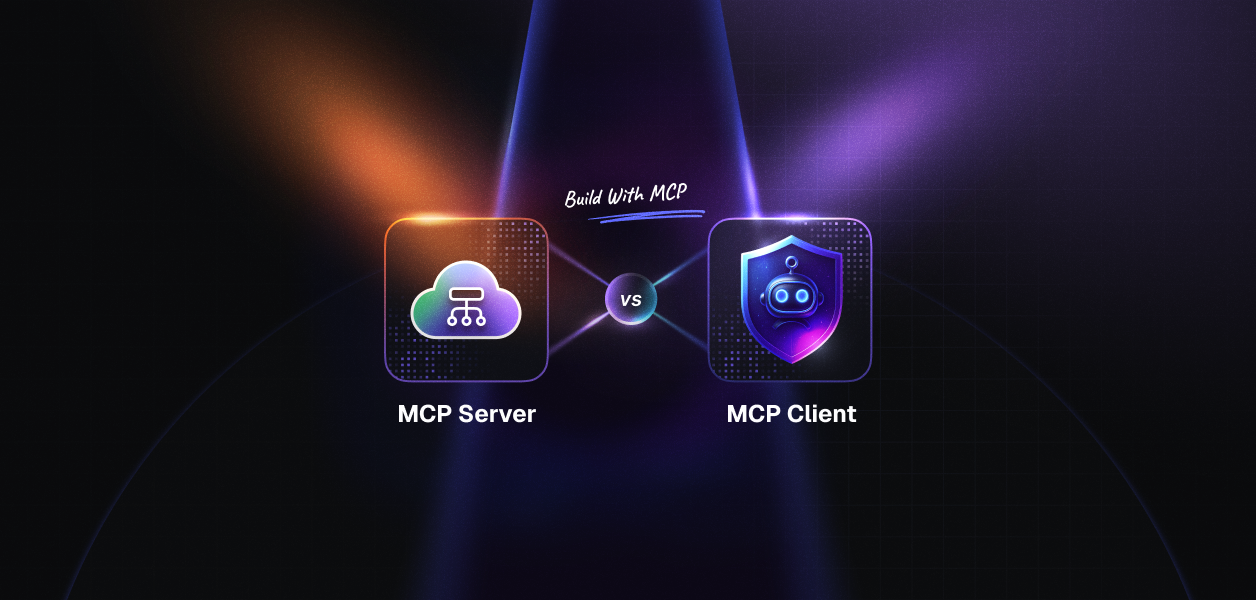
What is an MCP Server?
The Model Context Protocol (MCP) defines a consistent interface for exposing tools, resources, prompts, and data to Large Language Models. An MCP Server implements this protocol to act as a trusted execution and retrieval layer for AI clients.
MCP servers are typically built using Python or Node.js, expose JSON-RPC / HTTP APIs, and integrate with databases, vector stores, file systems, and enterprise services.
What We Deliver with MCP Servers
MCP Tool Endpoints
Define MCP-compliant tools for search, CRUD operations, workflows, notifications, and system actions.
Data Connectors
Secure integrations with SQL/NoSQL databases, vector databases, CRMs, ERPs, cloud storage, and internal APIs.
Retrieval & Context
Prompt templates, file resources, embeddings, and hybrid retrieval for RAG-based LLM applications.
Security & Guardrails
Authentication, authorization, policy enforcement, redaction, rate limiting, and human-in-the-loop approvals.
Observability & Evaluation
Structured logs, traces, metrics, error analysis, regression testing, and quality evaluation pipelines.
Deployment & Ops
Dockerized MCP servers with CI/CD, environment configs, secrets management, and Kubernetes-ready scaling.
Why Use MCP Servers?
MCP Servers act as a secure control plane between AI models and real-world systems, enabling consistent automation, governance, and operational safety.
Protocol Standardization
One consistent interface for tools, prompts, and resources across AI clients.
Enterprise Security
IAM, access controls, audit logs, and policy enforcement by design.
Operational Reliability
Resilient execution, error handling, and observability for production workloads.
System Integrations
Connect AI agents safely to enterprise data and operational systems.
Ready to build with MCP Server? Let's get in touch






We are ISO 9001:2015 Certified
Connect with us


Follow us