
Build Production-Ready Deep Learning Models with Keras
Oodles builds scalable, production-grade deep learning solutions using Keras with TensorFlow to accelerate model development and deployment. Our engineers leverage Python, Keras APIs, TensorFlow backends, GPU acceleration, and distributed training pipelines to deliver high-performance models for computer vision, natural language processing, speech recognition, and time-series forecasting. By combining Keras’ intuitive high-level abstractions with TensorFlow’s low-level control, Oodles enables faster experimentation, reproducible training, and seamless transition from research to enterprise-scale production environments.
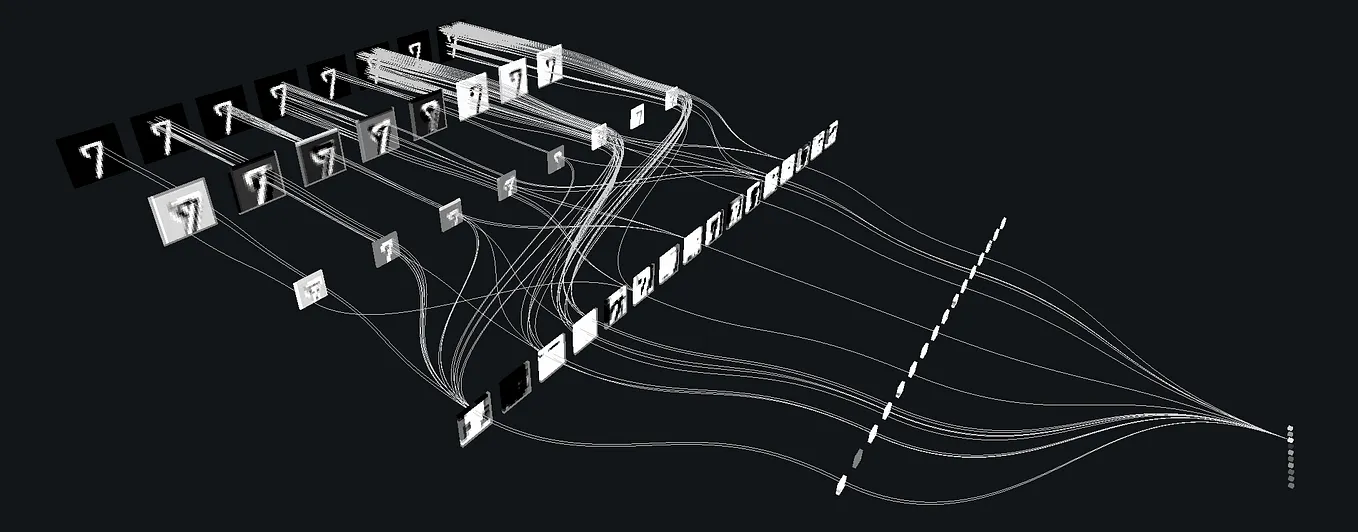
What is Keras?
Keras is a high-level deep learning framework written in Python and natively integrated with TensorFlow. It provides modular, reusable components for defining neural networks, training workflows, and deployment pipelines, enabling developers to build reliable deep learning systems with minimal boilerplate code.
Keras supports both the Sequential and Functional APIs, allowing flexible model design while maintaining compatibility with TensorFlow’s execution engine, distributed training, and hardware acceleration.
Why Choose Oodles for Keras Development?
- ✓ Rapid prototyping using Keras high-level Python API
- ✓ Production-ready models powered by TensorFlow backend
- ✓ Support for CNNs, RNNs, LSTMs, and Transformer-based architectures
- ✓ Seamless deployment to cloud, mobile, web, and edge platforms
- ✓ Expert optimization using Keras callbacks, optimizers, and tuning tools
Intuitive
High-level API
Flexible
Architecture design
Scalable
TensorFlow backend
Production-Ready
Deployment ready
How Our Keras Development Process Works
A streamlined workflow from neural network design to production deployment, leveraging Keras' simplicity and TensorFlow's power.
1
Requirements & Architecture Design: Analyze project requirements and design CNN, RNN, LSTM, or Transformer architectures using Keras Sequential and Functional APIs.
2
Model Implementation: Implement models using Keras layers (Dense, Conv2D, LSTM, Attention), configure activation functions, regularization, and compile models with TensorFlow optimizers such as Adam, RMSprop, and SGD.
3
Data Preparation & Training: Prepare datasets and train models using Keras fit(), data generators, and callbacks including EarlyStopping, ModelCheckpoint, and ReduceLROnPlateau.
4
Model Evaluation & Optimization: Evaluate models using validation and test datasets, apply hyperparameter tuning, transfer learning, and optimize inference performance using TensorFlow tools.
5
Deployment & Integration: Deploy Keras models using TensorFlow Serving, TensorFlow Lite (mobile/edge), and TensorFlow.js (web), and integrate with production systems with monitoring and retraining pipelines.
Key Features & Capabilities
Neural Network Architectures
Build CNNs, RNNs, LSTMs, and Transformer-based models using Keras layers, models, and TensorFlow operations.
Transfer Learning & Pre-trained Models
Fine-tune pre-trained models such as ResNet, MobileNet, EfficientNet, and BERT-based architectures using Keras, reducing training time and improving accuracy.
Model Training & Optimization
Train models with custom loss functions, Keras metrics, optimizers, batch normalization, dropout, and data augmentation pipelines.
Deployment & Production
Deploy Keras models to TensorFlow Serving, TensorFlow Lite, TensorFlow.js, and cloud platforms using optimized inference pipelines.
Custom Layers & Callbacks
Implement custom Keras layers, loss functions, and callbacks, enabling advanced training strategies and domain-specific deep learning solutions.
Model Interpretability
Apply Keras-compatible explainability techniques such as Grad-CAM, attention visualization, and activation mapping to understand and validate model predictions.
Ready to build with Keras? Let's get in touch






We are ISO 9001:2015 Certified
Connect with us


Follow us